
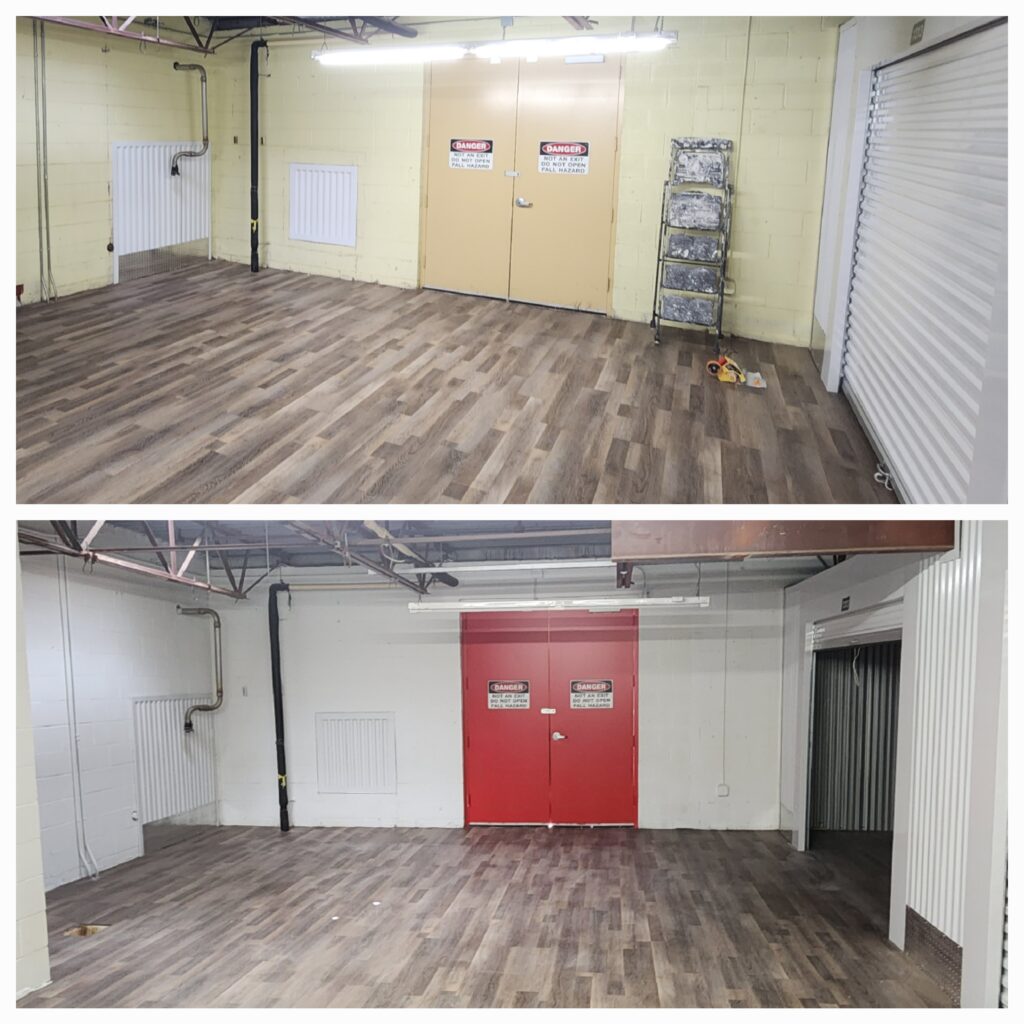
As a general contractor managing commercial projects across Metro Atlanta, you know the reality: painting delays don’t just affect the paint crew. They cascade through the entire schedule, pushing back flooring, punch lists, and ultimately your certificate of occupancy. After a decade of commercial painting work in McDonough, Conyers, Covington, and surrounding areas, SEE OUR OTHER PROJECTS I’ve seen how these delays happen—and more importantly, how to prevent them.
Here are the five most common painting-related schedule killers and what to look for when vetting painting subcontractors.
1. Inadequate Surface Preparation: The 3-Week Callback
The Problem:
A painting sub rushes through surface prep to meet your schedule. Two weeks after substantial completion, you’re getting calls about peeling paint in high-traffic areas or adhesion failures around door frames. Now you’re coordinating a return visit during your client’s business hours, managing access, and explaining delays.
The Real Cost:
It’s not just the repaint. It’s your time, the relationship damage with the property owner, and the hit to your reputation with that client’s other properties.
How We Prevent It:
Surface preparation isn’t negotiable at 360 Restores. For commercial work, that means:
- Proper drywall finishing before we touch it (we’ll flag issues in our pre-paint walkthrough)
TSP cleaning on any contaminated surfaces
Sanding and priming per manufacturer specs, not shortcuts
Caulking and patching that actually lasts
I’ve worked on several buildouts to risk callbacks. We document surface conditions before starting and get signoff on prep work before application begins.
2. Unclear Specifications and RFI Delays
The Problem:
Your painting sub gets the bid package and just… starts painting. Three days in, they’re asking whether the warehouse office should be semi-gloss or eggshell. Or worse, they assumed and painted it wrong. Now you’re dealing with a change order negotiation while other trades are waiting.
The Real Cost:
RFIs that should have been submitted during bid review are now coming up during installation. Your schedule shows painting complete next week, but you’re actually two weeks out while waiting on architect responses and product selection.
How We Prevent It:
We read the full spec section during bidding—not just the scope summary. Our bids include RFI lists for any unclear items:
- Paint schedules that reference non-existent room numbers
Spec conflicts (schedule says satin, detail says semi-gloss)
Incomplete finish requirements
Access or protection questions
You get our RFIs with the bid so you can get answers before we’re on site. No surprises during execution.
3. Wrong Product Selection for Application
The Problem:
The painting sub uses standard commercial-grade interior paint everywhere to save money. Six months later, your client’s high-traffic corridors look worn, the commercial kitchen walls won’t clean properly, and the warehouse loading area is already showing impact damage.
The Real Cost:
You’re fielding warranty calls and potentially eating costs that should have been avoided with proper product specification from the start.
How We Prevent It:
Different commercial spaces need different paint systems:
- High-traffic corridors: Scrubbable eggshell or satin with proper dry time between coats
Commercial kitchens: Semi-gloss with mildew resistance and cleanability
Warehouse spaces: Impact-resistant coatings in loading zones, standard elsewhere
Retail spaces: Products that can handle the humidity load from constant door traffic
We’re not the cheapest bid because we’re not painting a warehouse conversion the same way we’d paint an office build-out. The products are specified for the actual use conditions, and we discuss any value engineering options during bid review—not after the fact.
4. Poor Coordination with Other Trades
The Problem:
Your painting crew shows up and starts working while HVAC is still cutting in diffusers, creating dust throughout the space. Or they block access for the flooring crew who was supposed to start that same day. Suddenly you’re managing trade conflicts instead of keeping the schedule moving forward.
The Real Cost:
Two crews working at half-productivity because they’re working around each other. Your labor costs just doubled for those days, and nobody’s making their schedule milestone.
How
We Prevent It:
We’ve been the painting sub who had to coordinate with everyone from MEP trades to finish carpenters. Before we mobilize, we confirm:
HVAC work completion (or we schedule around active work)
Ceiling grid and lighting completion
Flooring schedule coordination
Door hardware installation timing
For warehouse conversions and restaurant buildouts—where trade stacking is inevitable—we break our scope into phases that work with the overall schedule. Primer before ceiling work, finish coats after. It takes more mobilizations but keeps the project moving.
5. Unreliable Subcontractors
The Problem:
This is the big one. Your painting sub commits to a start date, then doesn’t show up. Or they show up with half a crew. Or they leave the project halfway through for another job. You’re scrambling to find replacement contractors while your schedule collapses.
The Real Cost:
Everything. Missed deadlines, penalty clauses, client relationships, and your ability to bid the next project with that owner.
What Makes Us Different:
I’m not going to tell you we’ve never had a scheduling conflict—that would be lying.
But here’s what we do that matters:
- We’re local: Based in McDonough, working Metro Atlanta. Not running crews across three states.
Honest scheduling: If we can’t meet your date, we tell you during bid review. Not the day before mobilization.
Crew consistency: Same lead painter throughout the project who knows what we committed to.
Progress communication: You get weekly updates, not radio silence until you call asking where we are.
As a veteran-owned business, I built 360 Restores on the principle that your word means something. When we commit to your schedule, we show up.
The Bottom Line for Metro Atlanta General Contractors
Painting delays are often treated as inevitable on commercial projects. They’re not. They’re the result of poor planning, unclear communication, and subcontractors who don’t respect your schedule.
At 360 Restores, we’ve spent ten years learning how to be the painting subcontractor that GCs actually want to work with again. We’re not the cheapest bid—but we’re the bid that doesn’t come with surprise costs, schedule delays, or callbacks six months later.
Currently bidding a commercial project in McDonough, Conyers, Covington, or surrounding Metro Atlanta areas? Let’s discuss your schedule requirements and how we can help you stay on track.
Contact 360 Restores for Commercial Painting Estimates
Serving Commercial General Contractors in Metro Atlanta
McDonough | Conyers | Covington | Lithonia | Stockbridge